
Patient Records Made Simple
Patient Records Made Simple
UX / User Research
Overview: Patient Records Made Simple is a UX case study in progress, created as part of the Google UX Certificate Program. This personal project focuses on designing a streamlined system that enables doctors and healthcare professionals to document, store, and access patient information more efficiently, reducing time spent on administrative tasks and improving the quality of care.
Why: I chose this project because it tackles a real-world challenge in healthcare. I’m interested in improving essential systems by making them more intuitive, efficient, and user-friendly.
Duration: Aug 2025 - ongoing
My role: UX designer

Problem statement
NHS clinicians need a faster, more intuitive way to access and document patient records. Current systems are slow and cluttered, making it hard to review a patient’s history, add notes, or manage referrals efficiently. Designing a responsive platform that lets clinicians see medical histories in a clear timeline, add notes quickly, and handle referrals or tests smoothly can reduce administrative burden, streamline workflows, and improve patient care.
- Research -
- Research -
User Personas
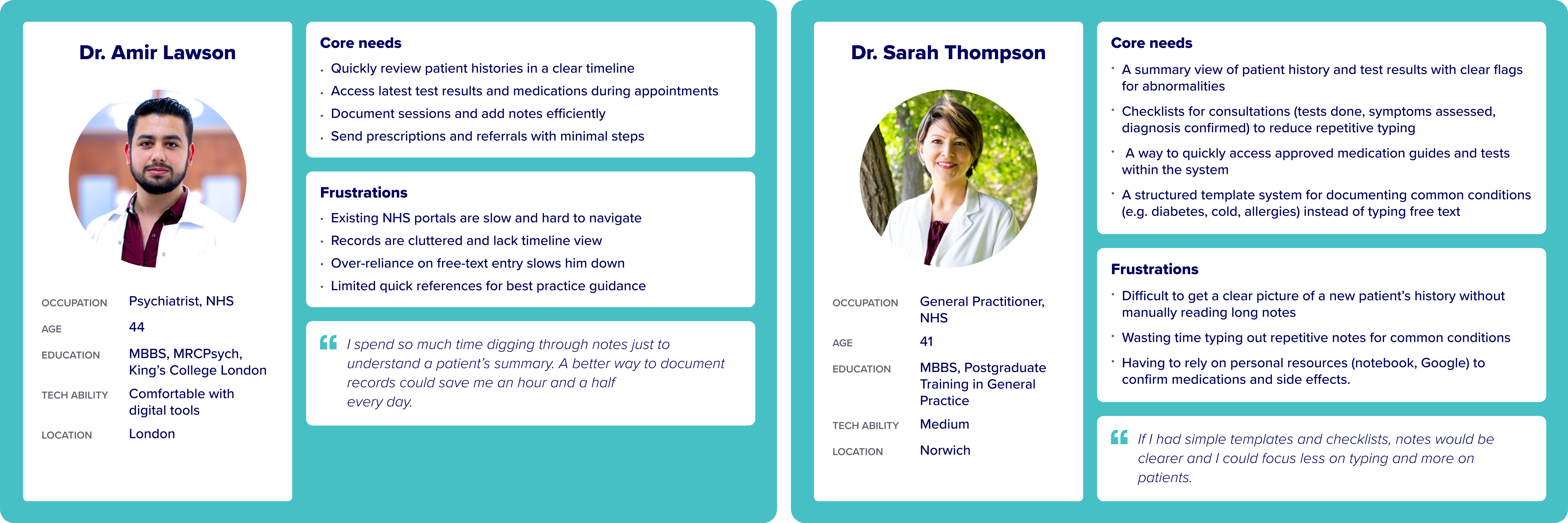
Potential users include doctors, specialists, nurses, admin staff, and healthcare assistants. For this project, I focused on the primary users – doctors and specialists – who rely most on patient records for decision-making and referrals. By centering the design around their needs, the solution aims to make their daily work easier and improve the care patients receive.
Research summary
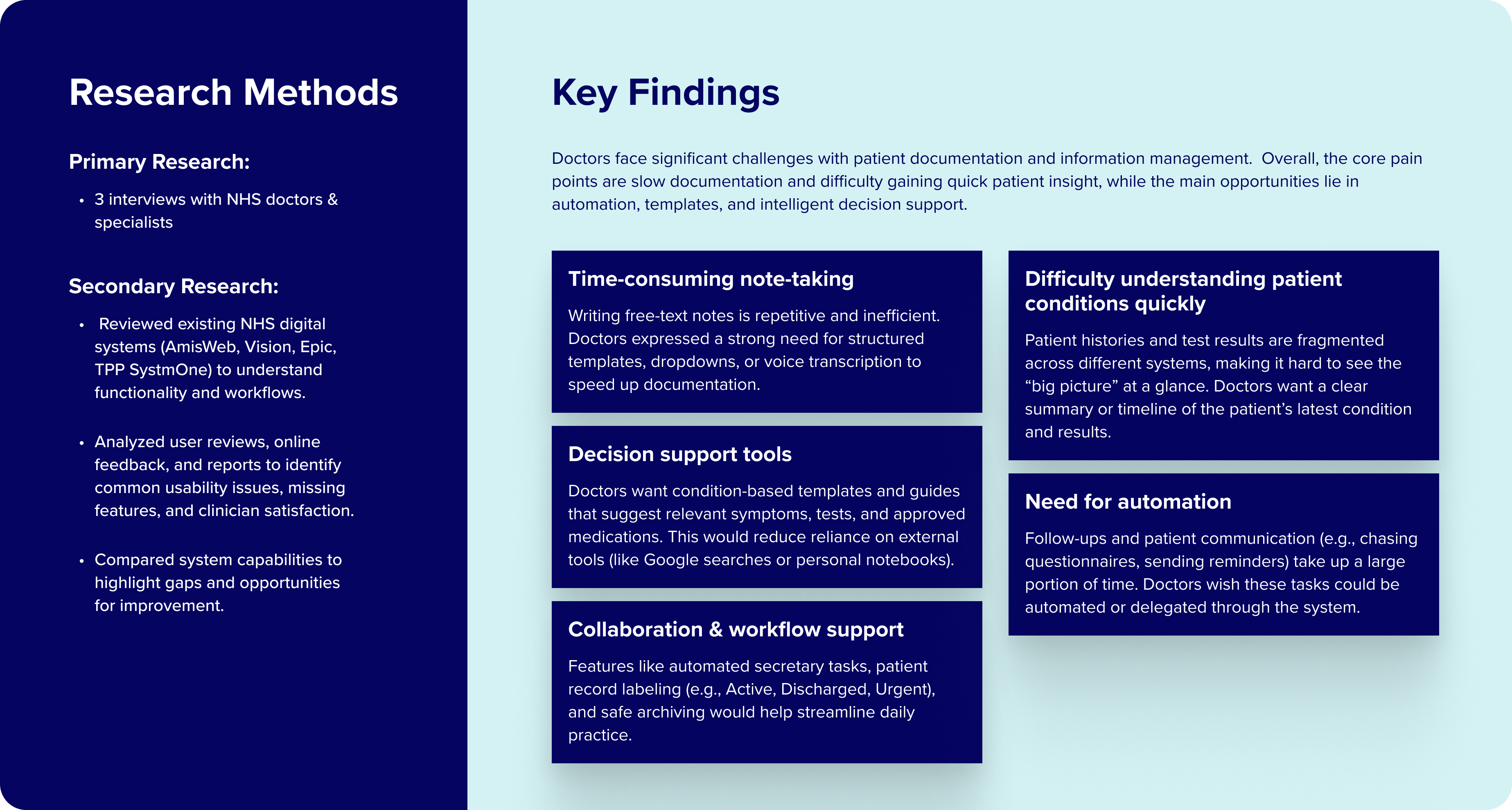
To better understand the challenges clinicians face with digital patient records, I conducted three qualitative interviews with NHS doctors and specialists. These conversations provided valuable insights into their daily workflows, pain points, and needs during patient appointments. In addition, I reviewed currently used NHS systems, drawing on available documentation and user reviews to identify common frustrations such as slow performance, fragmented records, and time-consuming documentation. Together, these findings helped me map the core pain points and opportunities for designing a more intuitive and efficient solution.

Analysis of existing NHS digital systems
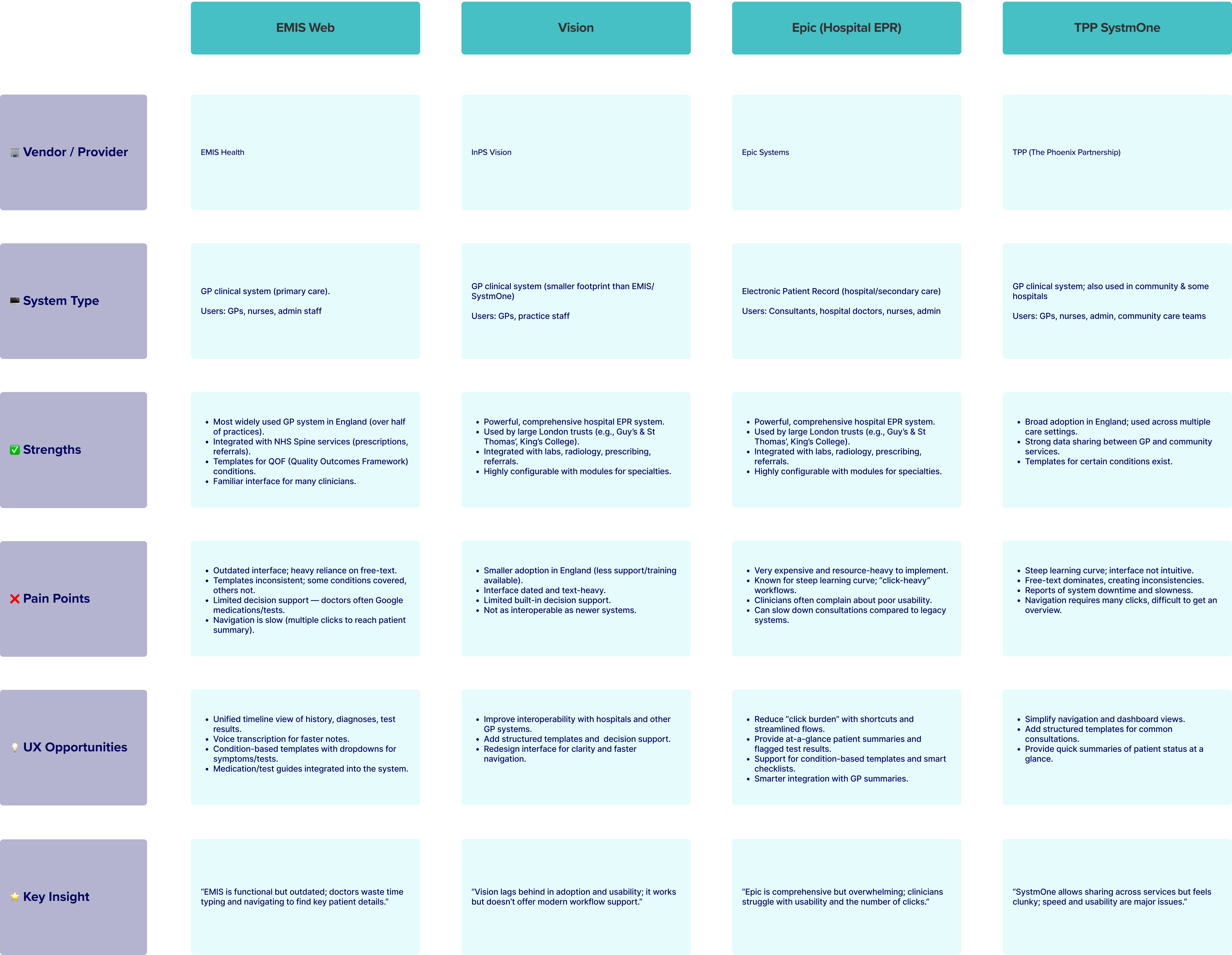
I created a comparative analysis of four major NHS digital systems. The insights helped identify challenges and areas where a new solution could provide meaningful improvements.
- Process -
- Process -
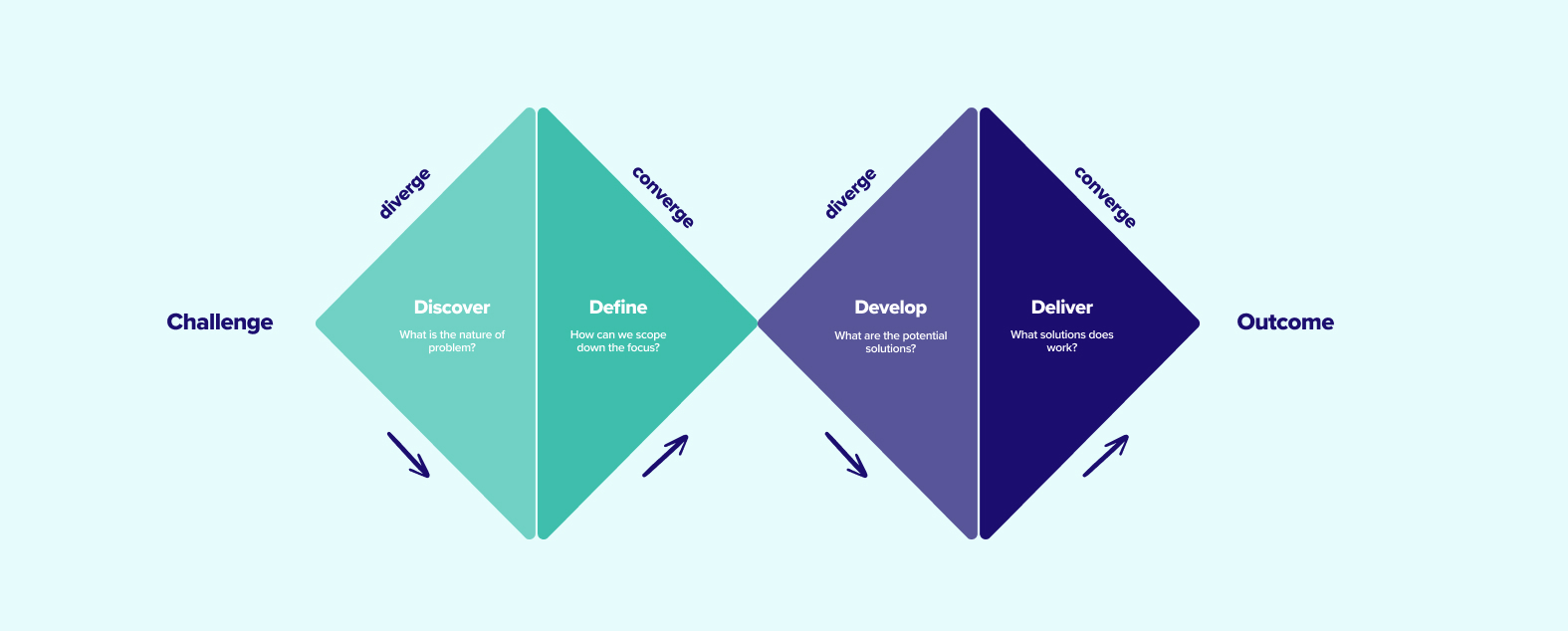
This project follows the Design Thinking Double Diamond process model, which guides UX work through four phases. Completed: Discover & Define | Upcoming: Develop & Deliver.
- Next Steps -
- Next Steps -
This project is ongoing. At the next stage, wireframes, prototypes, and visual designs will be added as the project continues to evolve.